













World Cup sees ‘mistaken identity’ law used for first time: ‘It sets precedent for even more VAR’

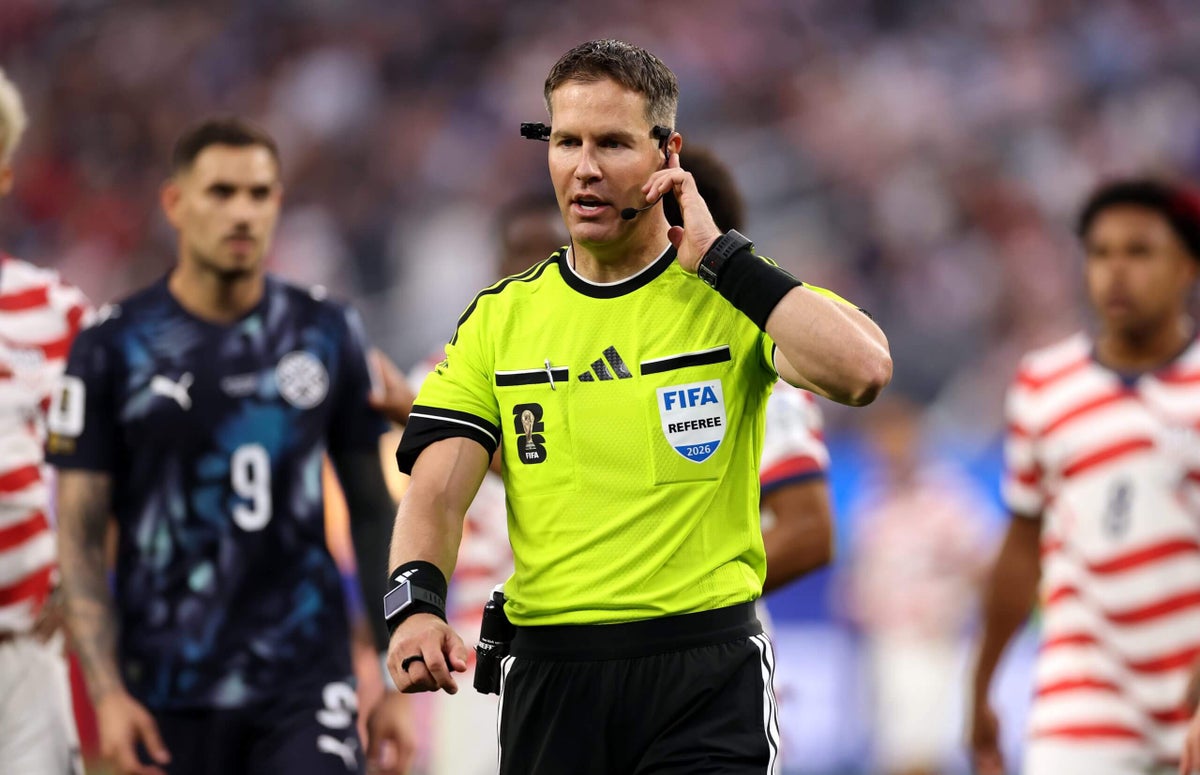
Tim Ream was the beneficiary of a World Cup first as a yellow card for a foul was rescinded after a case of mistaken identity.
The USMNT captain was initially booked by referee Danny Makkelie for what was perceived as a trip on Paraguay attacker Miguel Almiron.
Despite play initially being allowed to continue and Paraguay taking a free kick for the ‘foul’ by Ream, video assistant referee (VAR) Carlos del Cerro Grande intervened shortly after the ball was headed out of the United States’ penalty box and instructed Makkelie to watch the incident again on the screen.
Makkelie did so and, upon observing that Ream did not in fact make contact with Almiron, reversed his initial decision and instead booked the Paraguayan for simulation. Ream’s yellow card was cancelled.

This World Cup in the United States, Canada and Mexico has seen a number of new law changes, with the VARs given new powers to intervene.
Among them is the ability to step in the case of mistaken identity on yellow and red cards.
The rules of IFAB (the International Football Association Board, which determines the laws of the game) state that the VAR, who has independent access to match footage, may assist the on-field referee in the event of a ‘clear and obvious error’ or ‘serious missed incident’ in relation to mistaken identity, when the wrong player has been shown a red or yellow card.
Previously, IFAB’s laws stated that cases of mistaken identity were only reviewable by match officials “when the referee cautions or sends off the wrong player of the offending team).” Ahead of the World Cup, this was altered to “when the referee shows a yellow or red card but has clearly penalised the wrong player of either team for the offence in question; the offence itself cannot be reviewed except in the context of mistaken identity.”
The tournament could also see a VAR intervene to adjudicate on clearly incorrect second yellow cards and in the event of incorrectly awarded corner kicks, although it won’t extend to reversing a goal kick that should have been a corner.
The U.S. opened its tournament in style, racing into a 3-0 lead against Paraguay behind two goals from Folarin Balogun and an own goal in the first half at SoFi Stadium in Inglewood, California.
‘It sets a precedent for even more VAR’
Analysis from former Premier League referee Graham Scott
It might seem like a mundane refereeing decision, but actually, what happened is more important than that because it set three clear precedents — precedents that are unlikely to be reversed and will lead to even more VAR interventions.
First, play was allowed to restart, which was previously a hard stop on any VAR intervention — except violent conduct and spitting at someone.
This creates a range of potential problems, as other incidents could now occur during this passage of play, even if it is a matter of seconds. For example, a player could commit a yellow or red card offence that would stand — even though the game should not have been taking place.
Second, the definition of “mistaken identity” has been re-interpreted completely, as it was previously used only if the wrong player from the same team was cautioned.
Third, VAR has now been given licence to review a player’s first yellow card of the match, having only just been allowed to check on the validity of their second. It opens the prospect of all yellow cards being checked by VAR and potentially reviewed by the referee.
A statement win, player denied entry and a fabled sixth star | World Cup Daily Briefing
Megan Feringa and Amitai Winehouse
As is often the case with VAR, the problems started with a poor on-field decision.
Even on first viewing, it was clear that Almiron had taken a tumble. Having refereed his Premier League debut for Newcastle United, I could have warned Makkelie that he is not as innocent as he looks…
A minute later the free kick was taken, but after about five seconds Makkelie stopped the game. A single replay provided conclusive evidence that Almiron had dived, so I am not sure why it took a minute for the VAR to advise of his error.
There then appeared to be doubts over whether Makkelie needed to view replays for himself at the pitch-side monitor or could take the VAR’s word for it. Mistaken identity is supposed to be a factual decision, like most offsides, so the referee does not need to watch it back.
But Makkelie duly trotted to the screen, presumably on the grounds that he might review the footage and somehow conclude that Ream was indeed guilty. It felt like a waste of everyone’s time.
The right decision was reached and the right player was sanctioned. That is a better outcome than asking Ream to play the rest of the match on tenterhooks and Almiron getting away scot-free.
But the process was clunky, took more than three minutes to complete and caused confusion in the stadium and on the pitch.
We should also note how different this process was to a separate incident in the World Cup opener between Mexico and South Africa on Thursday.
In that 2-0 win for the co-hosts, Mexico’s Brian Gutierrez was given a yellow card in almost identical circumstances to Ream, after a clear dive by Teboho Mokoena that the referee bought. But there was no VAR intervention.
Goodness knows where all this ends, but one thing is for sure: the original concept of VAR — that it should offer maximum benefit for minimum interference — has departed the scene.
Graham Scott









 AI & Creator Equipment