











Why More Men Are Investing in Skincare in 2026

The stigma is gone. More than half of American men now maintain a daily skincare routine, a figure that would have seemed unlikely a decade ago. The global men’s skincare market is projected to reach $17.5 billion in 2026 and expand to $31.4 billion by 2033, reflecting a compound annual growth rate of 8.7%, according to Persistence Market Research. Men’s skincare is now the fastest-growing segment in personal care, driven by a generational shift in attitudes toward grooming, self-care, and long-term health.
This is not a trend built on vanity. It is built on a growing understanding that skin health is connected to overall health, professional presentation, and the kind of confidence that sustains performance over time.
The numbers behind this shift are significant. Gen Z men are 62% more likely to use skincare products than Gen X men, according to 2026 data from Strive Skin. Social media, influencer culture, and evolving definitions of masculinity are all driving this generational difference. Yet only 29% of men maintain regular skincare routines, compared to 62% of women, according to the same source—a gap that represents both an enormous market opportunity and a clear signal that many men are still leaving real benefits on the table.
The men who have closed that gap are not doing it for anyone else. They are doing it because the results are visible, and visibility matters in a world where first impressions form in seconds.
Men’s Skincare: Why It Matters Beyond Appearance

Interest among men has shifted toward resilience, recovery, and longevity. Increasingly, men are treating their skin as a living record of stress, sleep, environment, and age—not as a surface to be managed cosmetically, but as a system to be maintained functionally. This framing makes skincare feel less like grooming and more like performance infrastructure, which is precisely why it resonates with men who take their health and professional output seriously.
The health case for consistent skincare is straightforward and evidence-based. Daily application of SPF 15 or higher reduces the risk of squamous cell carcinoma by approximately 40% and significantly lowers melanoma risk, according to the Skin Cancer Foundation. Sun damage is also the primary driver of premature skin aging, including wrinkles, uneven tone, and rough texture that can make a man look older than he is.
A daily SPF moisturizer addresses both concerns simultaneously and represents one of the highest-return investments of any skincare product available. It costs less than a coffee per application, and its cumulative benefits compound over time.
Shop editor’s picks
What the Market Is Actually Producing

The men’s skincare market in 2026 is responding to what men actually want rather than simply repackaging women’s products in darker packaging. Moisturizers and creams lead the category with approximately 34% market share, according to Persistence Market Research, reflecting their everyday utility and multifunctional benefits, including hydration, barrier support, anti-aging properties, and sun protection.
Brands such as L’Oréal Men Expert and Bulldog Skincare are launching multifunctional products that combine hydration, sun protection, and anti-fatigue benefits in a single formula, reducing the barriers to routine adoption.
Demand for natural and organic formulations is also growing alongside these multifunctional products, driven by increased consumer awareness of synthetic ingredients and a preference for plant-based alternatives. This mirrors the broader wellness-first mindset reshaping purchasing decisions across categories. A man who cares about what goes into his body is increasingly likely to care about what goes onto his skin, and the market is responding with more sophisticated formulations than have previously been available at accessible price points.
The Cultural Shift Behind the Numbers
The most interesting aspect of men’s skincare growth in 2026 is not the market data itself. It is what that data represents culturally. Changing societal standards and growing attention to personal grooming are helping drive the market, but the shift is deeper than appearances. Men are increasingly viewing their appearance as an expression of self-respect rather than a performance for others, and skincare is one of the most direct manifestations of that mindset.
Celebrity influence has accelerated this normalization significantly. Public figures such as Jonathan Van Ness, Brad Pitt through his Le Domaine skincare line, Dwayne “The Rock” Johnson and his Papatui brand, and a growing number of professional athletes openly discussing their skincare routines have reduced the social friction around men investing in skincare.
When high-profile men treat skincare as a normal part of personal maintenance rather than an indulgence, it changes the cultural permission structure for everyone else. The result is a market growing at nearly 9% annually, with little indication of slowing down.
The men arriving late to this shift are not missing a trend. They are missing a genuine and measurable quality-of-life improvement.
Shop editor’s picks
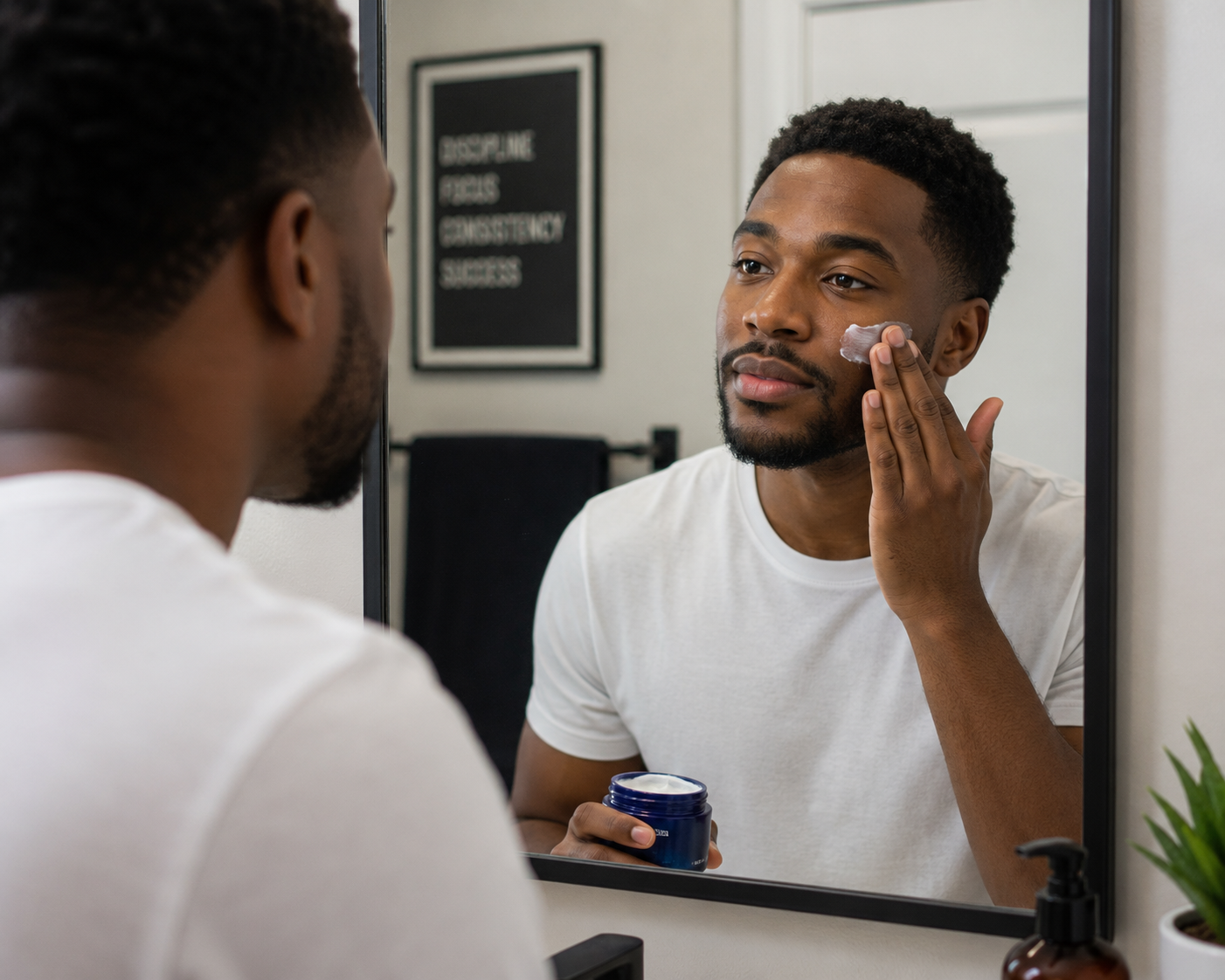
Featured image: Style Rave Studio/AI-generated Visual
Korean Skincare Is Winning Over Men Everywhere: Here Are Some Of The Best