











Bibby proposes CFL return to American expansion

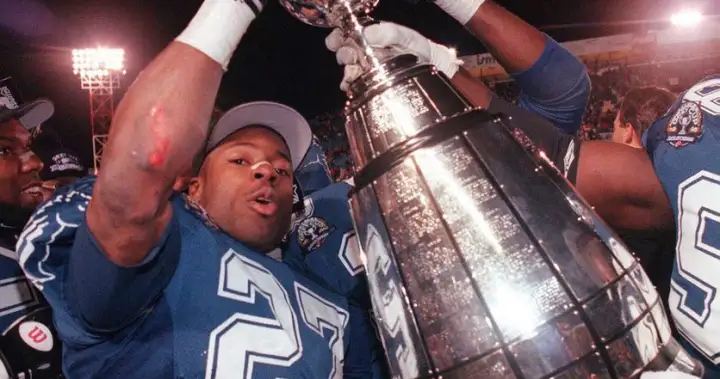
Quebec City is very much on the CFL’s expansion radar but Dr. Reginald Bibby feels the league should again incorporate American-based franchises.

Last month, veteran journalist Sylvain Bouchard divulged talks have been ongoing for more than a year between the CFL and business leaders regarding an expansion franchise and new stadium in Quebec City. A suitable venue has been the biggest obstacle to a 10th team being based in Halifax.
However, the Quebec City talks reportedly involve a proposed $350-million, 25,000-seat facility.
Bibby, a retired University of Lethbridge sociology professor and author, acknowledges the importance of a 10th Canadian franchise. But in the appendix of his book The Canadian Transformation: 1975-2025 — a compilation of Bibby’s national surveys on trends in Canada that’s available on Amazon — Bibby states CFL expansion into four American states that border existing Canadian franchises would increase the league’s U.S. television revenue and boost interest in both countries.
“Quebec City, I think that’s where it’s going to start and it would be an obvious plus in Canada,” Bibby said in a telephone interview. “But it will do little to excite Americans.
“The reality is success in the North American sports marketplace requires getting in on the vast U.S. media resources and that requires having American cities involved, otherwise U.S. interest will be minimal. That’s the major reason the CFL has been unable to land a financially meaningful contract with any American network or streaming service despite being a valuable property.”
Bibby’s plan would see the CFL keeping its current East-West format and the American clubs being in their own division. Those franchises could have a fixed number of players from the home state or adjacent areas on their roster to stimulate regional interest.
Related Videos

“The point is this would be expansion to proximate regions with well-established ties to Canada,” Bibby said.
American cities Bibby suggests are: Spokane or a Seattle suburb; Milwaukee or St. Paul, Minn.; Detroit or a suburb; and Syracuse or a suburb.
Get breaking National news
Get breaking Canada news delivered to your inbox as it happens so you won’t miss a trending story.
“The biggest issue in Canada has always been a stadium but the nice thing about this is the stadiums (in U.S. markets) are already there,” he said. “The big thing is investment so if they have a team of investors along with the CFL that like the regional concept and think it can work, I don’t think you’d want to take too long to get it in place.
“If you could put two teams in one year and within a year or two later put the other two in but have the public aware you’ve got this plan … I think it would spark a lot of interest in Canada and what’s going on with the CFL. I think it could happen fairly quickly.”
CFL commissioner Stewart Johnston said the league’s priority remains the Canadian market.
“The CFL is on a growth trajectory,” he said in a statement. “With regards to expansion, we are squarely focused on Canada.
“We’re encouraged by the interest from prospective ownership groups in various Canadian markets. Until there’s more to report, the league remains focused on its nine current teams and the 2026 season.”
Bibby appreciates regional proximity. He received a PhD from Washington State University before embarking on a five-decade tenure at Lethbridge. In 2006, Bibby was appointed an Officer of the Order of Canada.
In 1997, Bibby presented his survey findings to CFL officials at a two-day gathering in Edmonton. On the opening evening, he proposed to a TSN official the broadcaster should consider branding its Friday night telecasts.
“I suggested the network should give a night name to its games,” Bibby said. “When he (TSN representative) said with irritation, ‘We already have games almost every Friday night,’ I said, ‘So why not call it, ‘Friday Night Football?’
“That fall, TSN launched the program. I had too many ideas then and still have too many now.”
The CFL had American franchises from 1993-’95 based in Sacramento, Las Vegas, San Antonio, Shreveport, Birmingham, Memphis and Baltimore. It returned to its all-Canadian format in 1996.
But the expansion fees generated — reportedly between US$15 and US$18 million — were crucial for the cash-strapped league. In 1996, the CFL didn’t have enough money to pay Edmonton and Toronto players in the Grey Cup game but fortunately, Tim Hortons provided much-needed funds that ensured the players’ cheques would clear.
Bibby feels his plan would help net the CFL a more lucrative American TV deal. Its current broadcast contract with CBS Sports Network — which reportedly pays $1 million annually — expires at season’s end.
Bibby said the CFL adding four American territories wouldn’t threaten the NFL because those markets would never be considered for NFL expansion squads.
“This isn’t about selling out, it’s about getting a valuable product into the North American marketplace,” Bibby said. “If I were in the coffee business and Starbucks is already in Canada, I’d like to think I’d try creeping over the border and see if I could sell some stuff there given the market size and how lucrative it could be.
“I hope the league will think hard about this — and maybe eventually move to put the general plan or something like it in place. At minimum, its exploration would generate plenty of attention but the CFL just might find the border region strategy to be transformative.”
This report by The Canadian Press was first published June 17, 2026
© 2026 The Canadian Press