









Carpinteria Is the Perfect Beach Getaway From L.A.

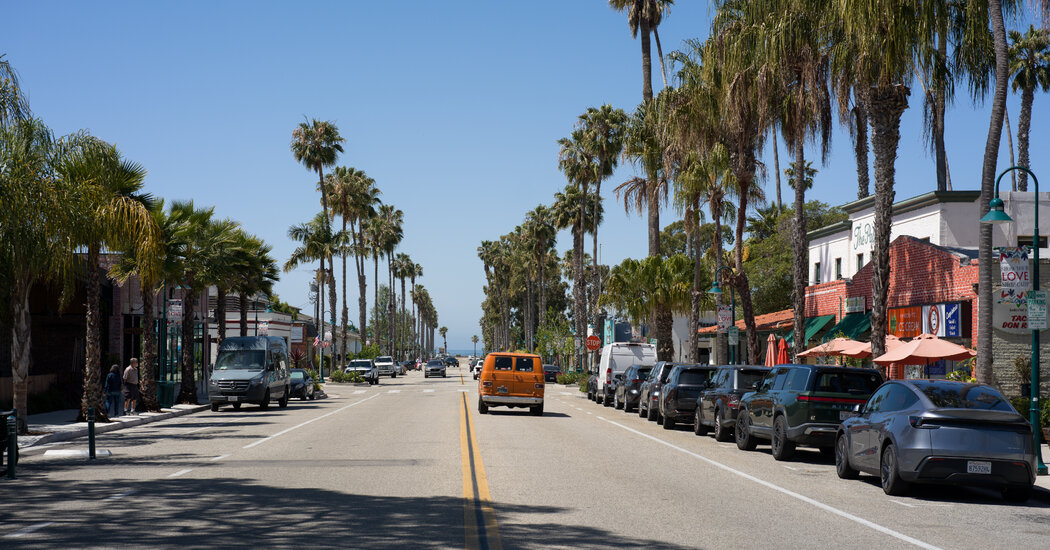
If you’re not looking for it, Carpinteria, an hour and a half north of Los Angeles, is the kind of place you’d fly right by. Tucked between marquee names like Ventura and Santa Barbara, this quiet little beach town is, well, a quiet little beach town. And when you pull off the 101 freeway onto Casitas Pass Road, the first thing you see is McDonald’s. Then a strip mall. Then the Chase Bank. Carpinteria, in other words, keeps its charms tucked away.
But Carpinteria — “Carp” to locals — with approximately 13,000 residents, is the quintessential weekend escape. One with its own, very distinct, personality.
“Carp maintains its charm because it’s largely forgotten,” said Warner Ebbink, the owner of Little Dom’s Seafood, a popular restaurant a few blocks from the beach. “I grew up in Manhattan Beach in the 1970s and it’s the same feeling — it’s a small town. This is a place of fishermen, surfers, salt-of-the-earth people.”
I’ve been coming to Carp for years — first as a teenager (I went to boarding school here), later as a tourist, and once I moved to Southern California, as a quasi regular.
None of the beaches are gated. The four-plus miles of coastline include bluffs, natural tar pits, a seal rookery, and Rincon Point, one of the best surf breaks in Southern California.
It’s a town of fish tacos and aguas frescas and a highly walkable main street and Victorian bungalows that all seem to have been sealed in a bubble. A town where shaggy-haired teenagers skateboard to the beach, and little kids run around in pajamas before bed.
Carp is a Beach Boys song.
A Weekend Escape
I drove into town on a recent Saturday morning with my children. The plan was to get breakfast burritos at Brass Bird Coffee, a cafe with a huge patio, an outdoor fire pit, homemade muffins and reliable local gossip.
But the best-laid plans are derailed by good shopping. On the walk from the car, I discovered Pacwest Blooms, a sweet little florist with an open door and no one inside. Then I wandered over to Lucky Llama Coffee House, where a bunch of people with Patagonia fleece jackets and playful Labradors were lining up outside. Right next door: Heritage Goods & Supply, a store with shelves of vintage Levi’s, racks of prairie skirts, and tables of iron candlesticks, natural sponges, cowboy boots and $50 composting buckets. If I had a dozen credenzas to adorn, I could have spent all day there.
Meanwhile, the kids. This happens in Carp. I go this way, they go that way, and it all works out in the end.
“Carp is laid-back, more family-oriented,” said Mollie Ahlstrand, the owner of Mollie’s, an Italian restaurant that’s more like a private kitchen. Ms. Ahlstrand makes her pasta, focaccia and biscotti from scratch and has a habit of hugging her customers. “I was in Montecito for 28 years, but the mudslide, the Thomas fire, the rent increase, …” she shook her head at the impossibility of it all. “I’ll tell you something: I serve the same food I served in Montecito but at half the price.”
Montecito, of course, is Carp’s northwestern neighbor and home to Prince Harry and Meghan Markle, Oprah Winfrey, Jennifer Aniston and a few thousand other people in that tax bracket. Montecito is breathtakingly beautiful in a manicured, airless kind of way. If Montecito has a culture, it’s one of $500 cashmere sweaters, $3,200 hotel rooms and very long driveways behind very large hedges.
A Walk Down Main Street
I headed down Linden Avenue, the de facto Main Street of town, past a new development called Linden Square completed about a year ago. Linden Square gave Carp its first town square — one with a yoga studio, an artisanal sourdough pizza place, a beloved microbrewery slash burger spot, a coffee bar, a surf shop, a home goods store, and dining tables, couches and fire pits. And overlooking it all, Arnie’s Rooftop Bar, a friendly modern-day Cheers, but with skin-contact wines.
A few blocks toward the beach, I found the Carpinteria of an earlier generation. The Spot — a burger joint that’s been serving fries and shakes to teenagers in wet suits for decades — hasn’t changed since I first ate there in the 1990s.
“I came here 35 years ago!” I told the woman behind the glass window.
If she was impressed by my history with the town, she hid it well. “We’ve been here since 1958. Order?”
A Shore Thing
Some towns you visit for their landmarks or great street food; some have a stretch of antique shops, a crop of boutique hotels or a burgeoning art scene. Carp has all of these — just not many hotels, although in June, the town is supposed to get its first boutique hotel, the Rincon Rooms. (There are currently a few motel and hotel options, most notably the comfortable, if not especially glamorous, Best Western Plus Carpinteria Inn.)
But this is Southern California, after all. And that means the beach is the star. The first thing that strikes you is how wide it is. You can walk for minutes before you even hit water. On a clear day you can see Santa Cruz Island, one of the Channel Islands, about 20 miles off the coast, and on an energetic one, you can walk a for miles along the coast.
In the span of an hour or two, you’ll most likely see seals, pelicans, sandpipers, dolphins, even occasionally, a passing gray whale. What you won’t see: a lot of people.
Head farther down the beach, past the tar pits and you’ll arrive at the Carpinteria Harbor Seal Sanctuary (also called the Seal Rookery). This section of the beach is closed from Dec. 1 through May 31 for pupping season — seals come first here — but you’ll get a good view of the seals from the Coastal Vista Trail, inside the Carpinteria Bluffs Nature Preserve.
The irony of places like Carpinteria is that the thing that makes them special is the same thing threatened when they get discovered. During the Covid pandemic, the town became an escape for people from Los Angeles, but people who’ve lived here for decades say that its soul hasn’t changed.
About a year ago, the Land Trust of Santa Barbara County acquired a few acres of the preserve, on the southern end of town overlooking the undulating hills of the Santa Ynez mountain range and what appears to be the entire Pacific Ocean. That means the public will continue to have access to hiking trails, bike paths and some of the most extraordinary views in California. It also means no hotel or celebrities will ever be able to develop the land.
“You can’t forget the great white nursery,” said Paul Denison, head of the outdoor program at the nearby Cate School, which I attended, and where Mr. Denison taught me to love nature many years ago. The nursery, on the northern end of the beach, is where what is believed to have been a newborn great white was captured on film in 2023. “To see these babies, it’ll just blow your mind,” he said.
Even the sharks know a good thing when they see it.
Follow New York Times Travel on Instagram and sign up for our Travel Dispatch newsletter to get expert tips on traveling smarter and inspiration for your next vacation. Dreaming up a future getaway or just armchair traveling? Check out our 52 Places to Go in 2026.