








Luxury Consumers Spending More Carefully Than Ever

Something has shifted in the relationship between luxury brands and the people who buy them. The global active luxury customer base contracted from 400 million consumers in 2022 to approximately 330 million by the end of 2025, according to Bain & Company and Altagamma, effectively returning to its estimated 2013 size. The contraction was driven in significant part by aspirational buyers exiting the market entirely, consumers who stretched to participate in luxury during the post-pandemic boom and have since pulled back as prices outpaced any corresponding improvement in quality or creativity.
Morgan Stanley now forecasts personal luxury goods growth of just 2.5% in 2026, revised down from an earlier projection of 4% to 5%, reflecting a slower-than-anticipated rebound after two years of contraction. Consumer confidence in the United States fell to its lowest point in the 74-year history of the University of Michigan Consumer Sentiment Index in April 2026, dropping below levels seen during the depths of the 2008 financial crisis. These figures are not a minor fluctuation. They are a structural signal.
The cause of this shift is not purely economic. The BoF-McKinsey State of Fashion 2026 report confirms the diagnosis: after years of raising prices without corresponding improvements in quality or creativity, the industry is being forced to rebuild trust with shoppers. Bain partner Federica Levato described the sentiment among big spenders as one of feeling “betrayed”—prices soared while creativity did not, and in luxury, perception is everything.
Between 2023 and 2025, the majority of luxury market growth came from price increases rather than volume gains, a lever that cannot be pulled indefinitely. Luxury consumers spending less are not necessarily doing so because they cannot afford to spend more. Many are doing so out of principle.
Luxury Consumers Spending: The Trust Deficit

The luxury industry built its post-pandemic recovery on pricing power. Brands raised prices aggressively throughout 2022 and 2023, initially encountering little resistance from a consumer base flush with pandemic savings and a genuine appetite for quality, exclusivity, and experience. The resistance has now arrived. According to Shopify’s 2026 Luxury Trends Report, 88% of high-income consumers now define status through experiences, personal values, and authenticity rather than visible brand symbols. For a significant portion of the market, the logo-forward, price-as-a-proxy-for-quality era is over.
China, which served as the engine of luxury growth for more than a decade, has become a source of structural uncertainty. Mainland China’s luxury market declined by approximately 6% to 8% in 2025. More significantly, 56% of consumers in mainland China planned to buy more domestic brands in 2025, attracted by stronger cultural relevance and better value for money. Jeweler Laopu Gold is among the local brands benefiting from this shift. The appetite for luxury has not disappeared. It has simply been redirected.
What Careful Spending Actually Looks Like
The luxury consumers who remain active in the market in 2026 are spending differently rather than simply spending less. According to Bain, luxury experiences continue to outperform traditional product categories as consumers prioritize travel, wellness, hospitality, and social experiences over conventional luxury purchases. The shift is from ownership to experience, from logos to meaning, and from acquisition to curation.
Celebrity behavior mirrors this change at a highly visible scale. Gwyneth Paltrow’s Goop, which combines products with lifestyle experiences, has consistently outperformed straightforward product-driven businesses in audience engagement. Victoria Beckham, meanwhile, rebuilt her fashion brand around a more focused and carefully curated collection strategy after years of aggressive expansion. The message from both the market and influential cultural figures is remarkably consistent: less, but better—and with a clear reason for being.
Resale represents another dimension of this evolution. Consumers who once bought new are increasingly turning to pre-owned luxury, motivated by both value and sustainability. The luxury resale market continues to grow at a faster pace than the primary market, prompting major fashion houses to invest in authentication services and resale infrastructure as part of their long-term strategy.
What the Industry Must Do Next

The luxury slowdown is triggering a period of strategic renewal that will determine which brands emerge stronger and which continue to struggle. Brands focused primarily on ultra-high-net-worth consumers continue to deliver strong results. Those with greater exposure to aspirational buyers face increasing pressure. This K-shaped dynamic is reshaping the competitive landscape, separating brands that can sustain premium positioning from those now being forced to justify their pricing more credibly.
Gen Z is watching closely. Bain reports that Gen Z will account for up to 30% of luxury market purchases by 2030, while 43% of consumers within the demographic expect to spend more on personal luxury goods in the coming year. Yet their definition of luxury differs fundamentally from that of previous generations. Digitally native and values-driven, they are not impressed by products alone. They expect personalization, genuine craftsmanship, transparency, and a brand story that can withstand scrutiny.
The luxury brands that will win the next decade are the ones investing in those expectations today, while the market is forcing a long-overdue return to authenticity.
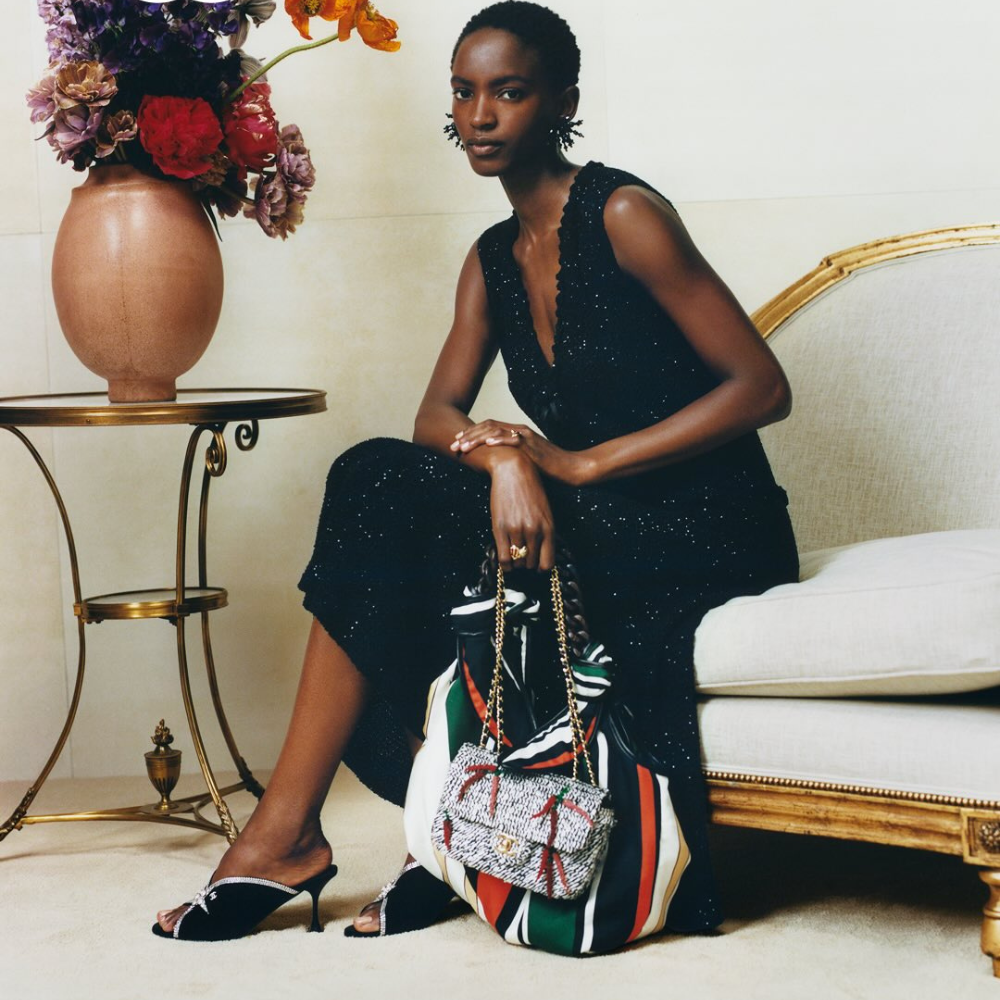
Featured image: Courtesy of Chanel
Everything You Thought You Knew About Luxury Fashion Is Being Rewritten