













Minister set to table legislation for First Nations drinking water Tuesday – National

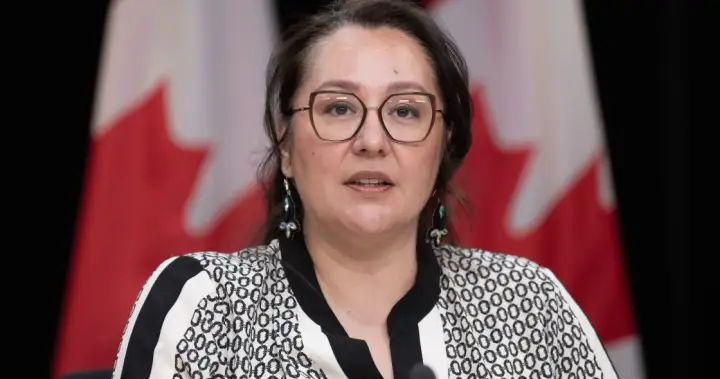
Indigenous Services Minister Mandy Gull-Masty is expected to table long-awaited legislation to govern clean drinking water in First Nations communities today.

The House of Commons is expected to rise by Friday for the summer break, which means the legislation likely won’t be debated or voted on until the fall.
The Canadian Press has obtained a draft of the bill labelled “for consultation until June 11, 2026.” It’s not clear if any changes were made since the consultation period ended.
A previous bill was introduced in 2023 by Prime Minister Justin Trudeau’s Indigenous services minister, Patty Hajdu.
Related Videos

That legislation, drafted in response to a lawsuit against the government that was settled in 2021, went beyond the terms of the settlement. It included an option for source water protection and recognition that First Nations have a human right to clean drinking water.
Get breaking National news
Get breaking Canada news delivered to your inbox as it happens so you won’t miss a trending story.
The legislation was opposed by the provinces of Alberta and Ontario, which warned that it would undermine resource development.
That bill was drafted with input from First Nations and nearly became law after weeks of study and debate, but it died when Parliament was prorogued last year.
In January of last year — months before the last federal election — Hajdu said she hoped “whoever’s in government next time picks this up” and called the bill “incredibly thoughtful legislation that was co-drafted with First Nations people.”
Gull-Masty promised last summer that a new bill would affirm First Nations’ human right to clean drinking water. She initially promised to introduce the legislation in the fall, but failed to do so. She has since said she would do so this spring.
Some First Nations leaders said they have not been consulted on the new legislation.
Both versions of the bill share the goal of ensuring First Nations have reliable access to safe drinking water and wastewater treatment, but the new draft legislation blurs the language in the old bill that affirmed access to clean drinking water as a human right.
“It is declared to be the policy of the Government of Canada to further the progressive realization, for individuals on First Nation lands, of the human right to safe drinking water, as protected by the International Covenant on Economic, Social and Cultural Rights,” the new draft bill says.
Progressive realization means governments move forward to the recognition of rights over time.

The previous legislation said “it is recognized and affirmed that it is a human right of every individual on First Nations land to have access to clean and safe drinking water in accordance with this Act.”
The new legislation includes a preamble that recognizes women as water keepers, and that elders keep traditional knowledge that is vital to water governance and management, as was included in the previous bill.
It also notes that clean and safe water is integral to First Nations’ cultures, including as environments for plants, fish and other animals.
The new legislation continues with the frame that First Nations, along with provinces and the federal government, have the ability to enter into tripartite agreements to protect source water on First Nations’ territories.
Several First Nations groups are expected to comment on the legislation after it is tabled in the House of Commons. It’s unclear whether Gull-Masty will be joined by First Nations leadership when she addresses media, as Hajdu was when she tabled the previous legislation.
© 2026 The Canadian Press