










Why New York Times Travel Writers Turn Down Press Perks and Freebies

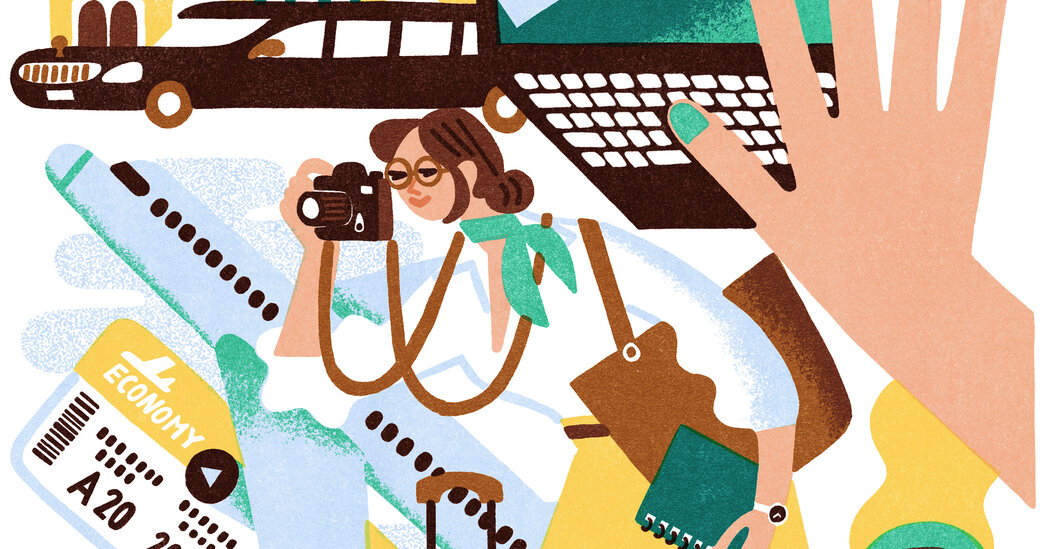
When Sarah Lyall set out to experience Air France’s new ultra-premium trans-Atlantic service for the New York Times Travel section, she got a chauffeured limousine to the airport and a personal compartment spanning four windows on the plane. And a bill for $11,000.
The Times paid.
The Travel desk has a longstanding policy that its writers don’t accept free travel packages or complimentary press trips, to avoid conflicts of interest and other ethics concerns about who foots the bill. Instead, The Times covers the associated expenses when its journalists report on a destination, chronicle a journey or review a hotel, even with sky-high fuel costs pushing up the price of travel. (The Times also tries to avoid hiring freelance writers who in the past three years have participated in freebie trips for other publications.)
Amy Virshup, who has been the Travel editor since 2018, said she wanted her writers to try to have the same experience that most readers can expect.
Press trips, she said, come with curated itineraries and sponsor-focused priorities, taking away the sense of adventure that is inherent in setting out on one’s own — and the independence in covering it as a journalist.
“The vision of the place that you get is a very specific one that’s tailored for you to write a story about,” Ms. Virshup said. “We want writers who are going to go and forge their own path, rather than walking one that has been determined for them by a hotel owner or a destination marketer.”
She receives dozens of emails each month offering her or a reporter free trips to exotic destinations. She turns them all down, and even books hotels under her husband’s name in an effort to avoid special treatment.
It’s part of a broader goal on the desk: To try to travel undetected as journalists.
“The minute they know you’re covering it, the whole dynamic changes,” said Ms. Lyall, a writer at large. “It’s like a restaurant critic going into your restaurant; when they know the critic is there, they’ll start bringing you better food and better service.”
Trips like Ms. Lyall’s flight provide a glimpse of the extreme high end of the market, but most of the time, Ms. Virshup said, Times writers aim to travel like the average person.
That means they book standard hotel rooms and economy seats on planes — premium economy is usually only allowed on coast-to-coast flights and some international flights.
“I’m in the same squished seat on the airplane, probably just more frequently than everybody else,” said Elaine Glusac, a freelance contributor who for the past six years has written the Frugal Traveler column, which is focused on traveling on a budget.
Most of the time, Times writers book hotels and pay for meals using their personal credit cards and are later reimbursed. The Times allows them to accrue airline miles and points for hotel stays. They are also allowed to accept meal or hotel vouchers if a flight is canceled, for instance, or to participate in free offerings at a hotel — think a group yoga class — so long as the activities are available to all guests.
Those rules may sound pretty unambiguous, but some situations are more nuanced.
While Ms. Lyall was visiting the Caribbean island of Barbuda in 2024, writing about Robert De Niro’s new luxury inn, she was invited to lunch at an all-inclusive resort where meals were normally included in the nightly rate.
“I had to insist that they charge me for the meal,” she said. “And they were like, ‘We don’t know how much the meal cost.’”
Though it can be awkward to turn down a free drink by citing institutional ethics policy, both Ms. Glusac and Ms. Lyall said that paying their own way has helped them to write honestly about the destinations and experiences they have covered.
“People can believe it when I say, ‘I think this is worth it,’” Ms. Glusac said. “We can make evaluations, and people can find them credible because we’re not being paid to say something on a sponsor’s behalf.”
Ms. Lyall added: “It’s nice to be able to say, quite proudly, ‘Our organization doesn’t accept things like this because we want to maintain journalistic neutrality.’”